Key Takeaways:
- The best Maths tuition centre helps children build structured thinking skills rather than relying purely on repetitive practice.
- Strong mathematical learning develops when children understand how to analyse questions, organise information clearly, and apply concepts confidently.
- Guided exploration, visual learning methods, and regular support can help abstract concepts feel more manageable for young learners.
- Consistent reinforcement and progressive skill-building help students steadily build confidence as Maths becomes more complex in the upper primary years.
Why Mathematical Confidence Matters Early
As children progress through primary school, Maths gradually becomes more demanding. Questions begin to require interpretation, logical reasoning, and multi-step problem-solving rather than straightforward calculations alone.
This is often where confidence starts to decline for some students. The challenge is not always a lack of effort, but rather the development of the structured thinking needed to approach unfamiliar questions clearly and systematically.
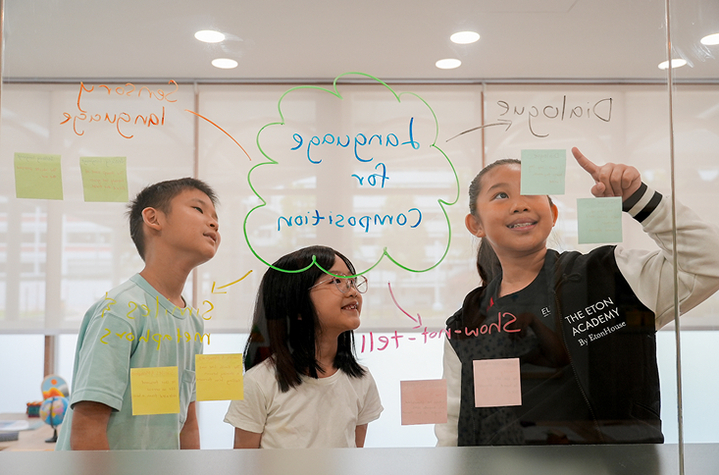
At The Eton Academy, lessons go beyond repetitive practice. The programme focuses on helping children build strong conceptual understanding in Mathematics and apply them thoughtfully across different types of questions. Through guided exploration and structured learning experiences, students develop the skills needed to approach Maths with greater clarity and independence.
Choosing the right Maths support is not just about quick gains. It is about finding a programme that helps children strengthen core concepts, grow in confidence and develop problem-solving skills that support them well beyond the classroom.
Here are 5 reasons why many parents choose The Eton Academy to support their child’s mathematical growth.
1. Recognised for Consistent Excellence in Maths Education
Strong Maths programmes are often recognised not only for academic outcomes, but also for consistency in teaching quality, curriculum design, and student support across different learning stages.
As part of the EtonHouse International Education Group, The Eton Academy draws from a broader educational philosophy centred around inquiry, guided exploration, and purposeful learning experiences. In 2025, the EtonHouse International Education Group received six awards at the HoneyKids Asia Education Awards 2025, reflecting recognition across multiple areas of education.
Among these recognitions, The Eton Academy received a Gold Award for Best Maths Enrichment. This reflects the confidence many parents place in the academy’s approach to helping children build structured mathematical thinking and long-term confidence in Maths.
While awards alone do not determine whether a programme is suitable for every child, they can provide reassurance that the curriculum, educator support, and learning structure consistently deliver meaningful outcomes over time.
For parents exploring the best tuition centre in Singapore, this balance between strong academic foundations and steady confidence-building often plays an important role in their decision-making.
2. A Problem-Solving Approach That Builds Logical Thinking
Strong mathematical ability develops when children learn how to think through problems carefully rather than rely purely on memorisation.
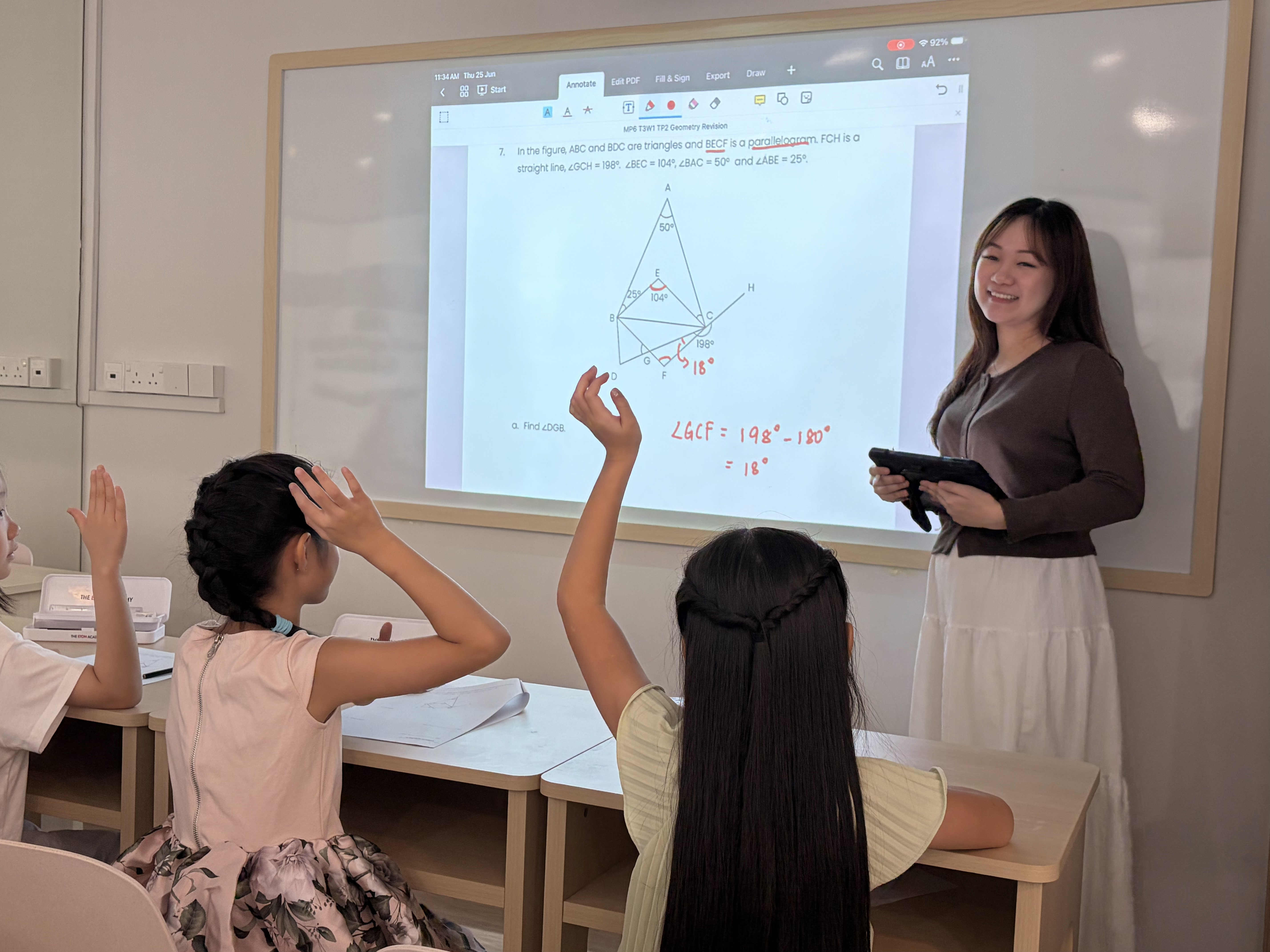
At The Eton Academy, our lessons place a strong emphasis on structured problem-solving. Instead of repeatedly practising identical question types, students are encouraged to examine questions closely, identify relevant information, and determine which strategies are most suitable for solving them.
This approach helps strengthen Maths problem-solving skills in primary school by teaching children how to approach unfamiliar questions more systematically. As students become more confident in analysing patterns and relationships within problems, they gradually develop greater independence in their thinking.
Over time, students become more comfortable analysing information, evaluating different approaches, and selecting suitable strategies. These habits help them tackle increasingly complex questions with greater independence.
3. Strong Alignment With PSLE Application Requirements
From Primary 1 onwards, The Eton Academy’s Maths curriculum is designed to progressively build the reasoning and application skills needed for PSLE success.
As students advance through primary levels, Maths shifts from straightforward procedures to application-based Maths questions that require interpretation, logical thinking, and multi-step problem solving. By PSLE, students are expected to apply multiple concepts in unfamiliar contexts under time pressure.
To support this progression, our curriculum scaffolds learning in a structured way from the early years. From Primary 1 onwards, students are gradually trained to:
- Understand and interpret increasingly complex questions
- Organise working in a clear, structured manner
- Identify key information efficiently
- Apply concepts across different contexts
- Build accuracy and reduce reasoning errors
By Primary 3 and 4, students begin more focused exposure to PSLE-style application questions, bridging the gap between foundational understanding and upper primary demands.
This early and consistent scaffolding ensures that students are not encountering application-based learning for the first time in upper primary, but have been steadily building the required thinking skills over time.
Many students struggle with Maths application questions not due to content gaps, but because they need stronger connections between concepts and contexts. Our approach addresses this early, building confidence alongside competence. This gradual progression is what helps students transition smoothly into PSLE-level problem solving with clarity and confidence.
Parents searching for effective P6 Maths tuition often look for programmes that prepare children not only for examination formats, but also for the reasoning demands behind them. This strong emphasis on long-term skill development and progressive learning is one reason many families consider The Eton Academy among the best Maths tuition centres for primary learners.
4. Regular Assessment and Targeted Support
Children progress at different rates, even within the same learning environment. Some may grasp numerical concepts quickly but struggle with interpretation, while others understand reasoning methods yet make avoidable procedural mistakes during problem-solving.
Regular assessment helps educators identify these patterns early.
At The Eton Academy, ongoing observation and assessment allow educators to monitor each student’s understanding more closely. Rather than focusing only on final scores, educators examine how students approach questions, where misunderstandings occur, and which concepts require further reinforcement.
This allows lessons and support strategies to be adjusted more purposefully based on each child’s learning needs.
Targeted support may include:
- Revisiting foundational concepts
- Reinforcing specific heuristics
- Strengthening interpretation skills
- Encouraging clearer presentation of working
- Providing additional guided practice for weaker areas
This structured approach helps prevent learning gaps from accumulating over time. When students move forward without fully understanding earlier concepts, more advanced topics can become increasingly difficult to manage.
Through progressive reinforcement and consistent guidance, students can strengthen their understanding step by step. This helps create a stronger foundation for future topics while reducing the likelihood of learning gaps accumulating over time.
5. Making Abstract Concepts Easier to Understand
Many children begin to struggle with Maths when concepts feel too abstract or disconnected from clear visual and logical meaning.
Topics such as fractions, ratios, algebraic relationships, and multi-step reasoning can feel overwhelming when introduced purely through formulas or fixed procedures. Young learners often understand concepts more effectively when they are given opportunities to explore ideas visually, verbally, and step by step before applying them independently.
At The Eton Academy, educators use guided exploration, visual representations, and structured discussion to support deeper understanding and clearer mathematical thinking.
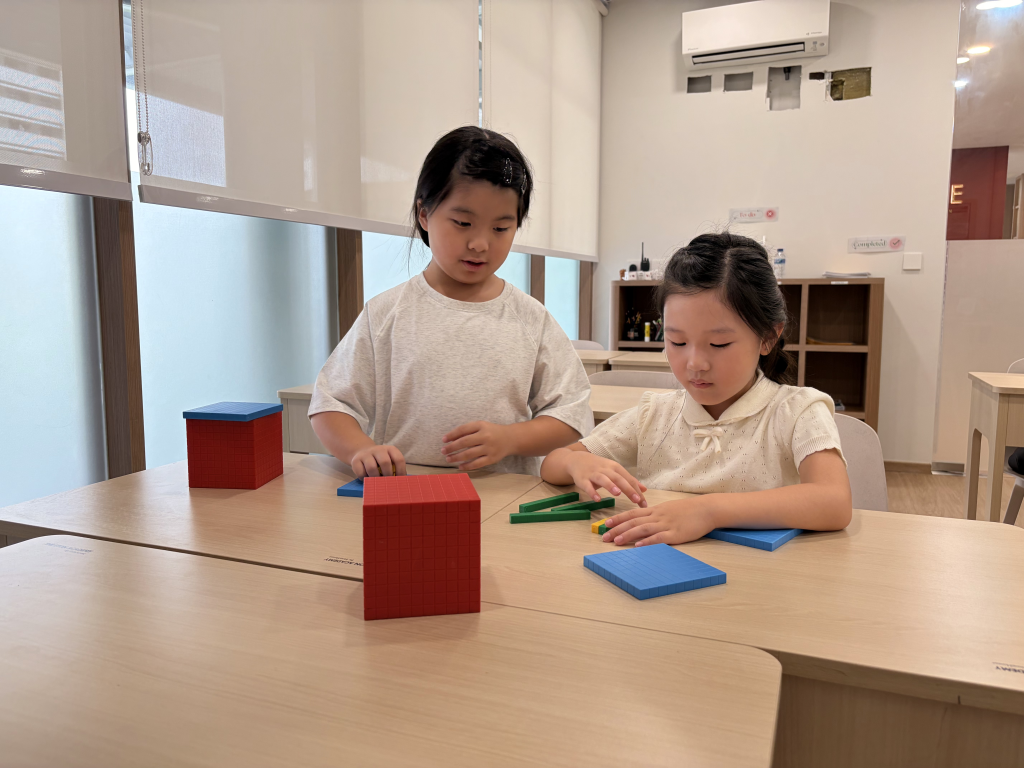
Methods such as model drawing help students visualise relationships between quantities more clearly, while guided questioning encourages them to think about why certain methods work rather than memorising procedures mechanically. Hands-on learning experiences also help make complex ideas feel more accessible and easier to connect with.
This approach strengthens conceptual understanding in mathematics, which becomes increasingly important as students encounter more advanced upper primary topics and more complex problem-solving demands.
A stronger grasp of underlying concepts allows students to:
- Transfer skills across different question types
- Adapt to unfamiliar scenarios
- Retain concepts more effectively over time
- Explain their thinking with greater confidence
- Approach challenges with less anxiety
As concepts become clearer and more connected, students are often better able to apply what they have learnt across different topics and question formats.
This emphasis on understanding, reasoning, and guided exploration is the reason many parents consider The Eton Academy the best Maths tuition centre in Singapore.
Supporting Your Child’s Mathematical Growth
The best Maths tuition centre does more than help children prepare for the next test. It helps them build strong foundations that support long-term mathematical success. As children progress through primary school, a clear understanding of concepts and a systematic approach to problem-solving become increasingly important.
At The Eton Academy, Maths programmes are available for children from Nursery 1 through to Primary 6, with lessons designed to progressively build both foundational understanding and higher-level problem-solving skills at every stage.
If you are looking for a learning environment that nurtures problem-solving skills, strengthens mathematical understanding, and supports consistent progress, book a trial class today to discover how we help young learners grow in confidence at every stage of their mathematical journey.